PERSONALIZED HATHA YOGA CLASSES FOR LADIES AND KIDS DUBAI (AL WARQA)

Free Your Neck - Gentle Yoga therapy for Cervical Spondylosis Relief
Heal your Neck Pain - Neck Pain & Stiffness - Yogic Lifestyle Management
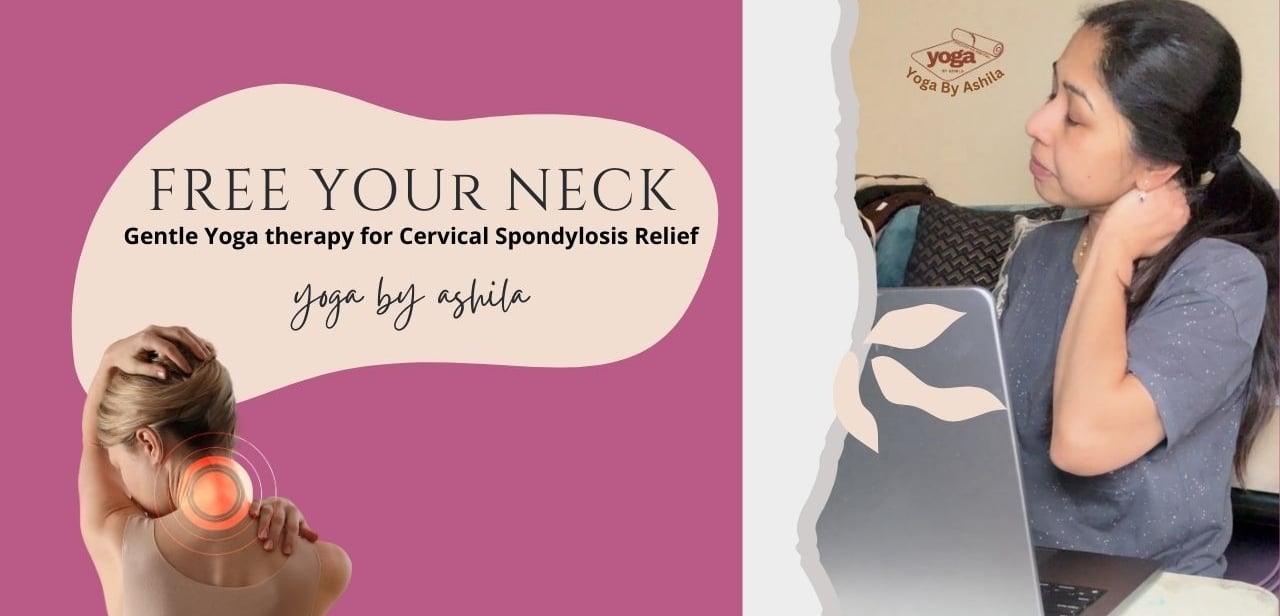
Cervical spondylosis, a condition characterized by the age-related progressive degeneration of the cervical spine. While this ailment is commonly associated with aging, it is increasingly affecting the younger generation as well. The rise in cases among the younger population can be attributed to prolonged screen time on electronic devices, poor postures, and sedentary lifestyles. Learn more about cervical spondylosis, its causes, symptoms, and treatment options to better understand and manage this condition.
Cervical spondylosis, also known as neck arthritis or cervical osteoarthritis, is a common condition that affects the cervical spine in the neck. This condition is primarily caused by the wear and tear of the bones and cartilage in the cervical spine over time. Several factors can contribute to the development of cervical spondylosis, including:
Causes of Cervical Spondylosis
Being overweight and Inactive (Sedentary Life Style)
A lack of physical activity often leads to weight gain or obesity which can adversely affect the cervical spine causing cervical spondylosis. Also being obese, reduces overall mobility, making it harder to engage in corrective excercises.
Family History (Genetics)
Some people are prone to developing cervical spondylosis due to genetic factors that influence the structural integrity of their spine.
Neck related injuries
Past neck injuries such as whiplash from a car accident or sports related injuries can lead to cervical spondylosis
Work related activities
This involves repetitive heavy lifting, prolonged overhead work can contribute to cervical spondylosis as these activities place continous stress on cervical spine leading to degeneration of intervertebral discs joints over time.
Smoking
Smoking accelerates the degenrative processes in the body and may lead to cervical spondylosis
Poor posture while using computer/laptop/iPads/Tablets/
Mobile/Gaming Gadgets
Some of the common postures that can lead to cervical spondylosis are Forward Head posture, jutting the head forward while using any of these devices can strain the cervical spine. Slouching postures can compress the spinal discs and overstretches the neck muscles.
Stress/Anxiety
At the time of intense stress and anxiety, our muscles in the neck and shoulder region tightens and may lead to conditions like cervical spondylosis.
Symptoms of Cervical Spondylosis
For most people, they dont experience any symptoms and are able to carry out daily activities. When the symptom start appearing, they typically include the below:
Pain & Stiffness around the neck and shoulder blades
Pain along the arm and in the fingers (sometime)
Pain may increases while standing, sitting , sneezing, coughing or tilting neck backward
Sometimes muscle weakness makes it hard to lift arms or grasp objects firmly.
If the spinal cord or nerve roots become pinched, then one may experience,
Loss of balance
Numbness or tingling affecting the shoulder and arms, and even in legs area
In very rare cases, it can result in loss of bladder or bowel control
Cervical Spondylosis Yogic Management
Relaxation Techniques
Use of pillow (7.5 cm to 10 cm thickness) is important as pillow should be placed under the neck rather than under the head while lying down sideways.
Sitting with back straight without slouching/lounging is extremely important.
Use of hot water bag if pain persists / ice pack on the neck if swelling.
Posture Control & Awareness
Manage Pain
In acute state of pain -Rest is only advised, practice relaxation techniques like Shavasana
Placement of neck while sleeping
Management of Stress/Anxiety
When you are stressed or anxious, its result gets collected in the neck and shoulders region. Hence beware of our thoughts and practice conscious relaxation.
Gentle Neck & Shoulder Excercises
Gentle movements of head, neck and shoulder help to improve the joint mobility and improve blood circulation around the region. It is important to start the practice gradually once the pain decreases.

Watch this video to know more about yogic management of Cervical Spondylosis.
HATHA YOGA CLASSES
Empowering women and children through personalized hatha yoga classes.
CONNECT
SUBSCRIBE
ashancr@gmail.com / enquiry@yogabyashila.com
+971-55 8212869
© 2025. All rights reserved By Yoga By Ashila